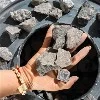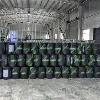

Pure calcium carbide is colorless and transparent crystal. Industrial products are gray, yellowish brown or black solids according to their purity, and those with high calcium carbide are purple. The new fracture surface of calcium carbide is glossy. After being exposed to the air and absorbing water, it loses its luster and turns into gray white powder, which reduces its quality and eventually becomes deteriorated and invalid. Industrial products generally contain 80% calcium carbide. Density 2.22g/cm3 (18 ℃). Melting point 2300 ℃. Insoluble in all known solvents. It can conduct electricity. The higher the purity, the better the conductivity. It is chemically active and can react with many gases and liquids at appropriate temperature. It decomposes with water to produce acetylene gas and calcium hydroxide, and releases heat. It can react violently with chlorine, hydrogen chloride, sulfur, phosphorus, ethanol, etc. at high temperature. Calcium carbide with too much impurity calcium phosphide will produce phosphine when it meets with water, which is very easy to explode.
Production process of calcium carbide: electric furnace reduction method is the only method to produce calcium carbide in industry at present. The coke and lime are crushed, mixed evenly according to the proportion, added to the closed calcium carbide furnace, energized and heated, and reduced at 2000-2200 ℃ to produce molten calcium carbide, which flows into the calcium carbide pot from the furnace to get calcium carbide after cooling and crushing.
Application of calcium carbide: Acetylene generated by the reaction of calcium carbide with water can synthesize many organic compounds, such as synthetic rubber, artificial resin, acetone, ketene, carbon black, etc. At the same time, acetylene is widely used in metal welding and cutting. When powdered calcium carbide is heated with nitrogen, it reacts to produce calcium cyanamide, that is, lime nitrogen. When heated, lime nitrogen reacts with salt to produce cyanide melt, which is used in gold mining and non-ferrous metal industry. Calcium carbide itself can be used as desulfurizer in iron and steel industry.