




Calcium Carbide
Calcium Carbide is an industrial chemical made up of the elements calcium and carbon. In its pure form, it appears as a colorless solid but its technical grade pieces appear as grey or brown in color. It emits an unpleasant garlic like odor in the presence of moisture. It reacts violently with water. Calcium Carbide is also known as calcium acetylide and its chemical formula is CaC2.
Why Choose Us?
Reliable Product Quality
Can ensure product quality and supply capacity, can provide a variety of particle size of high quality calcium carbide for a long time.
Wide Product Range
We can offer all size from: 0-2mm, 2-4mm, 7-15mm,15-25mm, 25-50mm, 50-80mm, 70-100mm, 80-120mm. Usually the package is 50kg and 100kg new iron drum.
Wide Market
Our products have been exported to Taiwan, Vietnam, Cambodia, Bangladesh, Pakistan, South Korea, Egypt and other countries for a long time.
Excellent Customer Service
We will ensure that our products and service could be the best so that our customer can be very competitive in their market and consequently get generous profits.


Advantages of Calcium Carbide
Versatility and Multiple Applications
Calcium carbide has a range of applications, from acetylene production to metallurgy and chemical processing. Its versatility allows it to be used in diverse industries, contributing to its overall importance as a valuable chemical raw material.
Cost-Effectiveness
Calcium carbide is relatively inexpensive to produce, making it a cost-effective raw material for various industrial and commercial applications. Its affordability contributes to its widespread use in industries where it offers a viable and economical solution.
Calcium Compound Production
Calcium carbide can be further processed to produce other calcium-based compounds, such as calcium hydroxide, calcium oxide, and calcium cyanamide. These derived compounds have their own set of applications in industries like construction, agriculture, and chemical processing.
Reductant in Metallurgy
Calcium carbide can act as a reductant in metallurgical processes, particularly in the production of certain metals like steel and ferroalloys. It helps remove impurities and enhance the purity and quality of the final metal products.
Application of Calcium Carbide
Making Acetylene Gas
This is calcium carbide's most famous use. Acetylene gas is a type of fuel that's also used to make a variety of chemicals. In Australia, people use acetylene for welding and cutting metal because it burns hot with oxygen.
Creating Chemicals
Calcium carbide is the starting point for making many different chemicals, like solvents, plastics, and synthetic rubber. These are big deals in Australia's manufacturing world, showing how important calcium carbide is.
Steelmaking
It is used in making steel to eliminate sulfur from iron, improving it. This is super important for making high-quality steel in the factories. Steel made from calcium carbide powder is said to be the strongest and most sturdy.
Ripening Fruit
When wet, calcium carbide can produce ethylene gas, which speeds up fruit ripening. However, because this process can be risky health-wise, Australia has strict rules about it and prefers other methods.
Helping the Environment
In Australia, researchers are looking into how calcium carbide can help treat wastewater and break down pollutants. This is still being figured out and is not used everywhere yet. However, the experiments are halted in various locations due to its corrosive nature.
Building and Construction
The leftover stuff from making acetylene gas with calcium carbide can make a concrete set (harden) faster. This is handy for building stuff quickly, especially in some big projects in Australia.
Mining
Long ago, miners used calcium carbide in lamps that produced light when water touched the carbide. Although these lamps are not common today, they are a cool part of mining history.
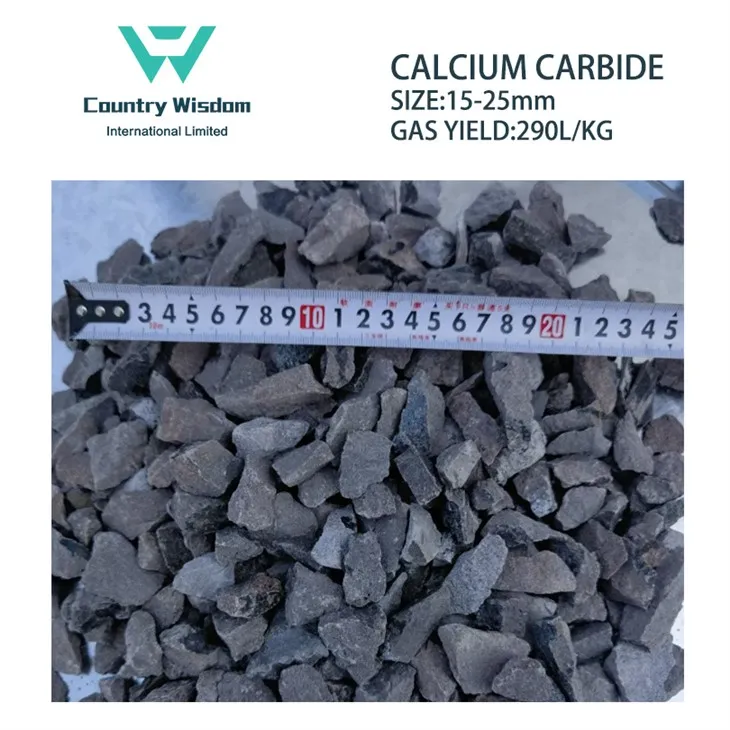
Calcium carbide is not volatile and not soluble in any known solvent, and reacts with water to yield acetylene gas and calcium hydroxide. Its density is 2.22 g/cm3. Its melting point is 2160 °C, and its boiling point is 2300 °C. Since the acetylene that forms upon contact with water is flammable, the substance is listed in hazard class 4.3.
Calcium acetylide was first obtained by German chemist Friedrich Wohler in 1862 when he heated an alloy of zinc and calcium with coal. The scientist described the reaction of calcium carbide with water. Calcium carbide reacts vigorously with even mere traces of H2O, releasing a large amount of heat. If there is an insufficient quantity of water, the resulting acetylide spontaneously combusts. Calcium acetylide reacts violently with aqueous solutions of alkalis and diluted non-organic acids. These reactions release acetylide. With its strong reductive properties, CaCz reduces all metal oxides to pure metals or turns them into carbides.
It is easier to obtain calcium carbide from its oxide than from calcium itself, as the oxide is reduced at temperatures above 2000 °C. The metal and carbon combine:
CaO + 3C→CO↑+ CaCz
The reaction takes place in an electric arc furnace, where a mixture of unslaked lime and coke or anthracite is heated. The technical product is grey due to the presence of free carbon, calcium oxide, phosphide, sulfide, and other chemical compounds. CaC2 com-prises 80-85% of the product by mass.
How to Make Calcium Carbide?
Making calcium carbide is a difficult process. Also, it involves a complex method. Furthermore, you need a furnace, lime, and coal for making it.
Moreover, this process requires a high temperature that cannot be achieved with traditional furnaces and we need an electrical arc furnace for it.
Furthermore, the high temperature that we need can’t be achieved with traditional combustion method. Moreover, the finished product is 80 per cent calcium carbide.
First Step- Insert lime and coal into an arc furnace.
Second Step- After that heat the furnace to at least a temperature of 3,632 degrees Fahrenheit (2,000-degrees Centigrade). Also, make sure that the temperature does not exceed 3,812 degrees Fahrenheit (2,100-degrees Centigrade).
Third Step- Next place the electrode paste near the electric arc of the furnace to bake.
Fourth Step- After that, feed the baked electrode to the furnace as it will act as a catalyst for the lime and coal.
Fifth Step- After the baking is complete move the molten calcium carbide into a piece of cooling equipment (A chilling mechanism). Furthermore, it will allow it to solidify.
Sixth Step- Put the solidified calcium carbide into a crushing mechanism or use some tool to break it into the desired size.
For laboratory purposes, acetylene can be obtained from the hydrolysis of calcium car-bide. To avoid local overheating, it is recommended to use generators in which calcium carbide is immersed in a relatively large amount of water. The acetylene that is released in the reaction is contaminated by impurities of ammonia, oxygen and hydrogen sulfide (its main mass is absorbed by the water alkaline medium), hydrogen phosphide, silicon hydride and hydrogen arsenide. This reaction is interesting from a historical standpoint, for in the era of gas lamps, private houses and public buildings were lit with acetylene lamps. They were even installed in the first cars. Portable acetylene lamps are used in mines to this day. Nowadays, in the reaction of the hydrolysis of calcium carbide, much more acetylene is obtained than in the past, but acetylene is no longer the final product of synthesis. The substance is used as an intermediate product for the synthesis of or-ganic compounds. On the basis of the hydrolysis reaction of calcium carbide, several methods for determining water content have been developed. In the majority of them, the amount of acetylene is measured by manometric or volumetric methods. Other methods have found a limited use based on the combustion of acetylene, in which oxy-gen consumption or flame intensity is measured.


Effects of Calcium Carbide
Calcium carbide affects the neurological system by inducing prolonged hypoxia. It is known to cause symptoms like headache, dizziness, high sleepiness, memory loss, cerebral oedema, numbness in the legs and hands, general weakness, cold and damp skin, low blood pressure and seizures.
Prolonged exposure to calcium carbide may cause a build-up of fluid in the lungs (pulmonary edema), a medical emergency.
According to the latest research done by scientists, when calcium carbide comes in contact with moisture in the atmosphere, it produces acetylene gas, which like ethylene accelerates the ripening process of fruits and vegetables.
Calcium carbide is considered hazardous by the OSHA Hazard Communication Standard.
A Few Reliable Sources To Buy Calcium Carbide
Industrial Chemical Suppliers
Companies sell many different chemicals, including calcium carbide. They supply industries such as manufacturing, farming, and building. Various government-regulated suppliers can help the lab owner easily get their desired amount of calcium carbide.
Online Marketplaces
Many sellers offer calcium carbide on online sites. Lab owners can compare prices, buy in bulk, and read reviews about the sellers. Pick a seller with good reviews and proper paperwork that follows the rules and standards.
Specialty Chemical Companies
Some companies specifically sell to those in mining or welding, where calcium carbide makes light in lamps or creates acetylene gas. These businesses usually have the right kind of calcium carbide for these jobs.
Local Agricultural Suppliers
Lab owners might find calcium carbide at local farm supply stores in places where it is allowed and safe to use it to ripen fruit faster. Just ensure it is okay to use it this way according to local health and safety laws.
How Is Calcium Carbide Used to Ripen Fruit?
When calcium carbide is mixed with water, it releases acetylene gas. Acetylene gas acts as a fruit ripener. It has a similar activity to ethylene, a natural hormone that fruits produce. Ripe fruits release this gas — this is the reason why some fruits ripen quicker when you store them with other fruits.
Ethylene gas is also applied to fruit as an artificial ripener. It’s approved by the U.S. National Organic Standards Board, which makes guidelines for organic fruit standards. Ethylene is much safer than acetylene and calcium carbide.

Preservation of Calcium Carbide
Calcium carbide is readily attacked by the air and the moisture contained in the generators and consequently decomposes during the storing, with formation of acetylene gas. Aside from the loss, this decomposition is also attended with dangers. One of the oldest methods of preservation is the saturation of the carbide with petroleum. In using such carbide a layer of petroleum forms on the surface of the water in the generator, which prevents the water from evaporating, thus limiting the subsequent generation of acetylene from the remaining carbide. Instead of petroleum many other substances have been proposed which answer the purpose equally well, e. g., toluol, oils, solid bodies, which previously have to be liquefied, such as stearine, paraffine, rosin, etc.
Our Factory
Country wisdom international limited, is a special calcium carbide factory which located in inner mongolia of China. The factory has only the right to produce in China, but no right to export.So we export with the company of COUNTRY WISDOM INTERNATIONAL LIMITED.The two companies are the same manager.

Ultimate FAQ Guide to Calcium Carbide
Q: What does calcium carbide do?
Q: What are the uses of calcium carbide?
Q: What is the role of calcium carbide in carbide lamps?
Q: How is calcium carbide produced?
Q: Is calcium carbide harmful to health?
Q: What happens when calcium carbide is mixed with water?
Q: Why can't you touch calcium carbide?
Q: Is calcium carbide an explosive?
Q: Is calcium carbide still used?
Q: How long does calcium carbide last?
Q: What is the shelf life of calcium carbide?
Q: What happens when calcium carbide is heated?
Q: What is the calcium carbide rule?
Q: What are the benefits of calcium carbide?
Q: Does calcium carbide react with ice?
Q: What happens when calcium carbide reacts with heavy water?
Q: What is another name for calcium carbide?
Q: How do you handle calcium carbide?
Q: Is it safe to use calcium carbide to ripen fruits?
Q: What is the color of calcium carbide?