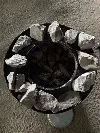
Calcium carbide is produced by heating a mixture of lime and carbon in an electric furnace. The reaction between the two materials produces calcium carbide and carbon monoxide gas. The chemical equation for the reaction is:
CaO + 3C → CaC2 + CO
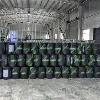
Calcium carbide is produced in large granules or lumps and must be crushed before being used in the PVC production process.
In order to produce PVC using the calcium carbide method, the calcium carbide is first reacted with water to produce acetylene gas. The equation for this reaction is:
CaC2 + 2H2O → C2H2 + Ca(OH)2
The acetylene gas is then used to produce vinyl chloride monomer (VCM) through a series of reactions. The first step is the reaction of acetylene with hydrochloric acid to produce vinyl chloride:
C2H2 + HCl → C2H3Cl
The vinyl chloride is then further reacted with oxygen and a catalyst to produce VCM:
2C2H3Cl + O2 → 2CH2=CHCl + 2HCl
The VCM is purified and then polymerized to produce PVC.
The calcium carbide method of PVC production has several advantages over other methods, including its low production cost, high purity, and ability to produce large quantities of PVC. However, the use of acetylene gas in the process is a safety concern, as acetylene is an explosive gas. Strict safety guidelines must be followed to ensure the safe production of PVC using this method.

Apr 24, 2023
Leave a message
Production Of PVC By Calcium Carbide Method
Send Inquiry